How Often Should You Tune Your Piano in Toronto? (2026 Guide)
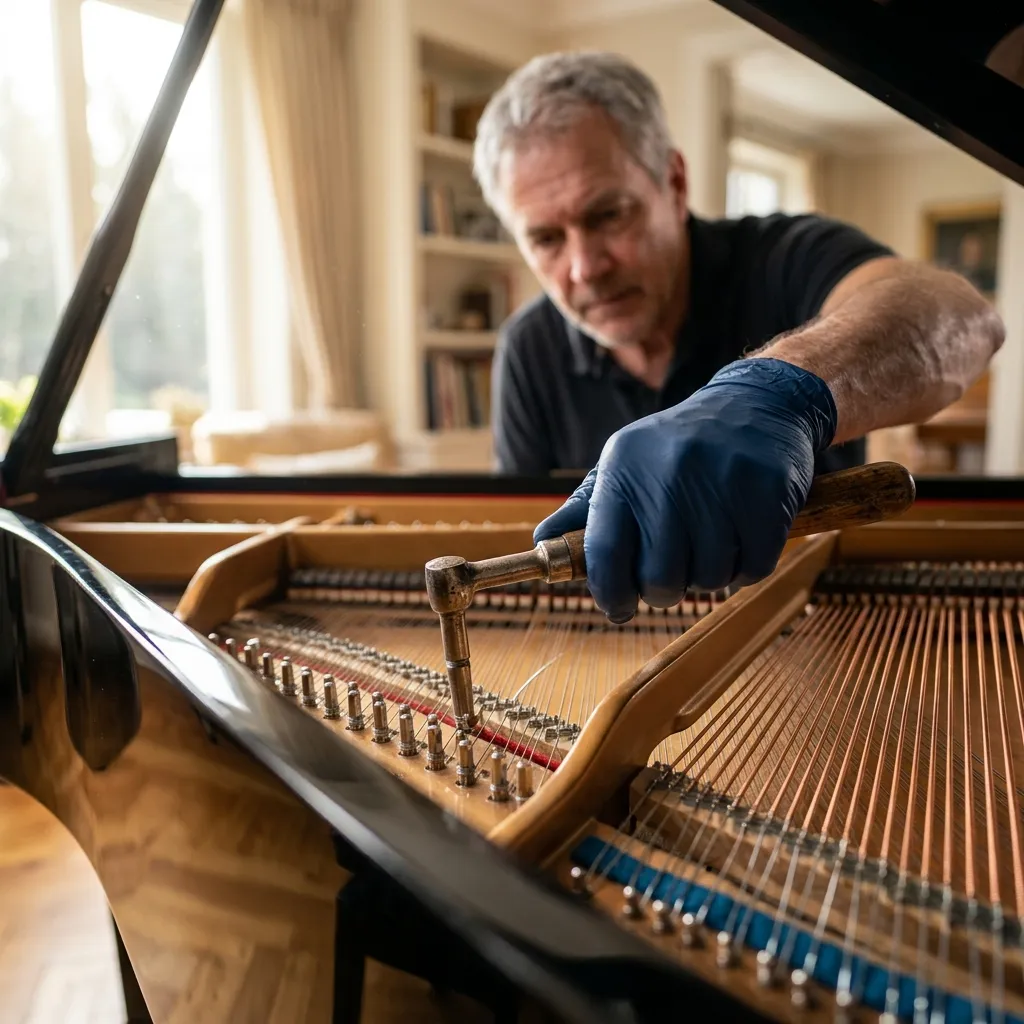
One of the most common questions our master technicians receive is: "How often do I really need to tune my piano?" While many owners assume that a piano only goes out of tune from heavy playing, the primary enemy of tuning stability is actually the environment. In a city like Toronto, where seasonal humidity swings drastically between deep winter and humid summer, the answer is uniquely tied to physics and climate.
The Manufacturer's Standard: Twice a Year
Most major piano manufacturers, including Yamaha, Kawai, and Steinway & Sons, universally recommend tuning your acoustic piano at least two to four times per year. For the average Toronto home, we strongly recommend a bi-annual schedule—typically once in the late spring (after the heating is turned off) and once in late autumn (after the heating is turned on).
Why Toronto's Climate Destroys Tuning
An acoustic piano's soundboard is made of solid spruce. It is built with a natural upward curve (the "crown") that presses against the strings to transmit sound. Wood is hygroscopic, meaning it absorbs and releases moisture from the air.
- Summer Swell: During humid Toronto summers, the soundboard absorbs moisture and swells. This pushes the strings tighter, causing the pitch to go sharp.
- Winter Shrinkage: During dry Toronto winters, indoor heating strips moisture from the air. The soundboard shrinks and flattens, releasing tension on the strings and causing the pitch to drop flat.
Because the wood never returns to the exact same position it was in before the seasonal shift, the piano slowly drifts out of tune in unequal increments. If left for a full year, the overall pitch will drop significantly below the international A440 standard.
The "New Piano" Exception
If you have just purchased a brand new acoustic piano, the rules change. New piano wire stretches rapidly during its first year of high tension, and the new wood is still settling into its environment. Manufacturers recommend tuning a new piano three to four times during the first year. Waiting too long can void warranties or make it incredibly difficult for the piano to hold its tune later in life.
What Happens If You Wait Too Long? (The Pitch Raise)
If you wait 2 to 3 years between tunings, your piano's pitch will drop drastically. Simply tuning it back to A440 in one pass won't work—the sudden increase in thousands of pounds of tension across the frame will cause the piano to instantly detune itself as the technician works.
In this scenario, the technician must perform a Pitch Raise. This is a rapid, high-tension pre-tuning pass designed to stretch the strings back to equilibrium before the actual fine-tuning begins. A pitch raise essentially doubles the labor and increases the cost of the tuning appointment. Regular bi-annual tunings prevent the need for costly pitch raises and preserve the structural integrity of your instrument.
Conclusion
To keep your piano sounding beautiful and protect your investment, schedule a tuning every six months. If your piano has gone years without service, don't worry—our certified technicians at Piano Inside specialize in pitch raises and complete structural rehabilitation. Call us today to restore the voice of your acoustic masterpiece.