Why Old Pianos Sound Better (Or Do They?): The Myth of the Golden Age Piano
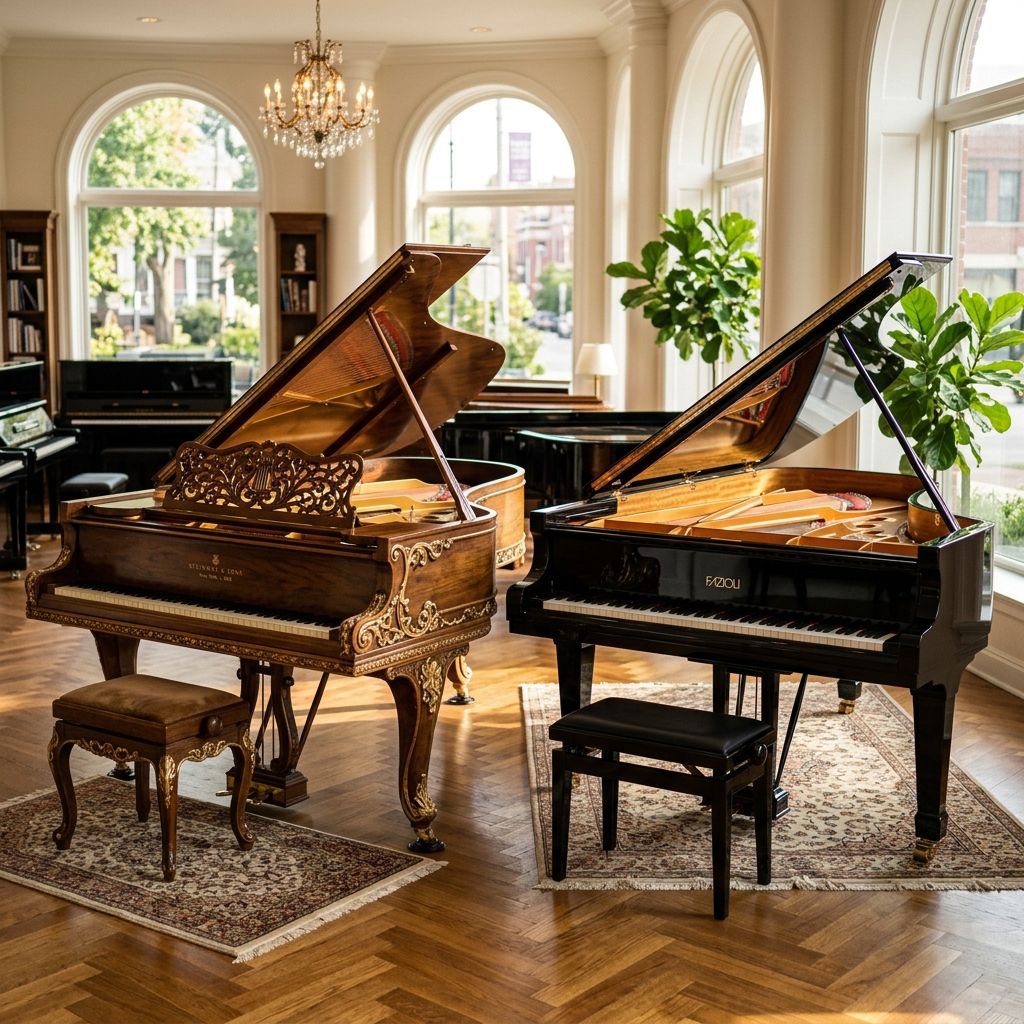
Walk into any gathering of classical musicians or dedicated piano aficionados, and you will eventually hear a familiar sentiment: "They just don't build them like they used to." The belief that pianos built during the early 20th century—often referred to as the "Golden Age" of piano manufacturing—are inherently superior to modern instruments is a deeply ingrained myth in the musical community. But is there actual truth to this romantic notion, or is it merely nostalgia coloring our perception of sound?
As professionals who regularly restore, tune, and transport both century-old heirlooms and brand-new concert grands, we have a unique vantage point on the vintage versus modern piano debate. The reality is far more nuanced than a simple declaration of superiority.
The Case for the Golden Age Piano
There are undeniable truths to the claims made by vintage piano enthusiasts. During the late 19th and early 20th centuries, piano manufacturing was at its absolute peak in terms of cultural importance and sheer production volume. Companies like Steinway, Mason & Hamlin, and Chickering were building instruments with old-growth woods that are largely unavailable or illegal to harvest today.
These slow-growing, highly dense woods, particularly the sitka spruce used for the soundboards, possessed incredibly tight grain structures. Many technicians argue that this old-growth wood provides a distinct resonant character—a warmer, more complex, and "singing" tone that modern, fast-growth spruce struggles to replicate. Furthermore, the craftsmanship of the era involved hundreds of hours of meticulous hand-shaping and fitting by master artisans.
The Relentless Reality of Aging Wood
However, the romanticization of the Golden Age piano often ignores the basic laws of physics and material science. A piano is essentially a high-tension wooden machine. The soundboard is constantly under hundreds of pounds of downward pressure from the strings, and the pinblock is fighting against 20 tons of combined string tension.
Wood, no matter how old or magical its origin, is organic. Over 80 to 100 years, wood dries out, loses its cellular elasticity, and structurally fatigues. A century-old soundboard has lost its original "crown" (the slight upward curve built into it to resist string pressure), resulting in a loss of sustain and projection, particularly in the upper treble registers. The pinblock, responsible for holding the tuning pins tight, often develops micro-cracks, rendering the piano incapable of holding a stable tuning.
Therefore, when someone plays a 1920s grand piano and marvels at its sound, they are either playing an instrument that has been completely rebuilt with new, modern parts (new soundboard, new pinblock, new strings), or they are playing a severely fatigued instrument and confusing a "muffled, dead" tone for a "warm, vintage" tone.
The Precision of Modern Engineering
While modern manufacturers may not have access to the same old-growth timber, they possess something the Golden Age builders did not: computer-aided design (CAD), advanced acoustic modeling, and incredibly precise CNC machining.
Today's premium pianos are built to tolerances measured in fractions of a millimeter. The action geometries are mathematically perfected for lightning-fast repetition and perfectly even touch weight across the entire keyboard. Modern cast-iron plates are structurally superior, and the synthetic glues and epoxies used today are vastly more resilient to humidity changes than the animal hide glues used a century ago.
The Verdict
An original, untouched 100-year-old piano will almost never outperform a high-quality modern piano in terms of dynamic range, tuning stability, and action responsiveness. However, a Golden Age piano that has been painstakingly restored by a master technician—marrying the unparalleled vintage rim and old-growth woods with a brand new soundboard and modern action components—can truly be the best of both worlds, resulting in an instrument of breathtaking musicality.
Navigating the Piano Market in Toronto?
Whether you are looking to purchase one of the finest, fully-restored used pianos Toronto has to offer, need expert piano tuners Toronto musicians trust to evaluate a vintage instrument, or require professional piano movers Toronto families rely on to safely transport your new grand, Piano Inside is here to help. With 25 years of specialized expertise, we ensure your instrument achieves its maximum musical potential. Contact us today for professional consultation and services.