Why Orchestras Tune to A442: The Secret World of Concert Piano Tuning
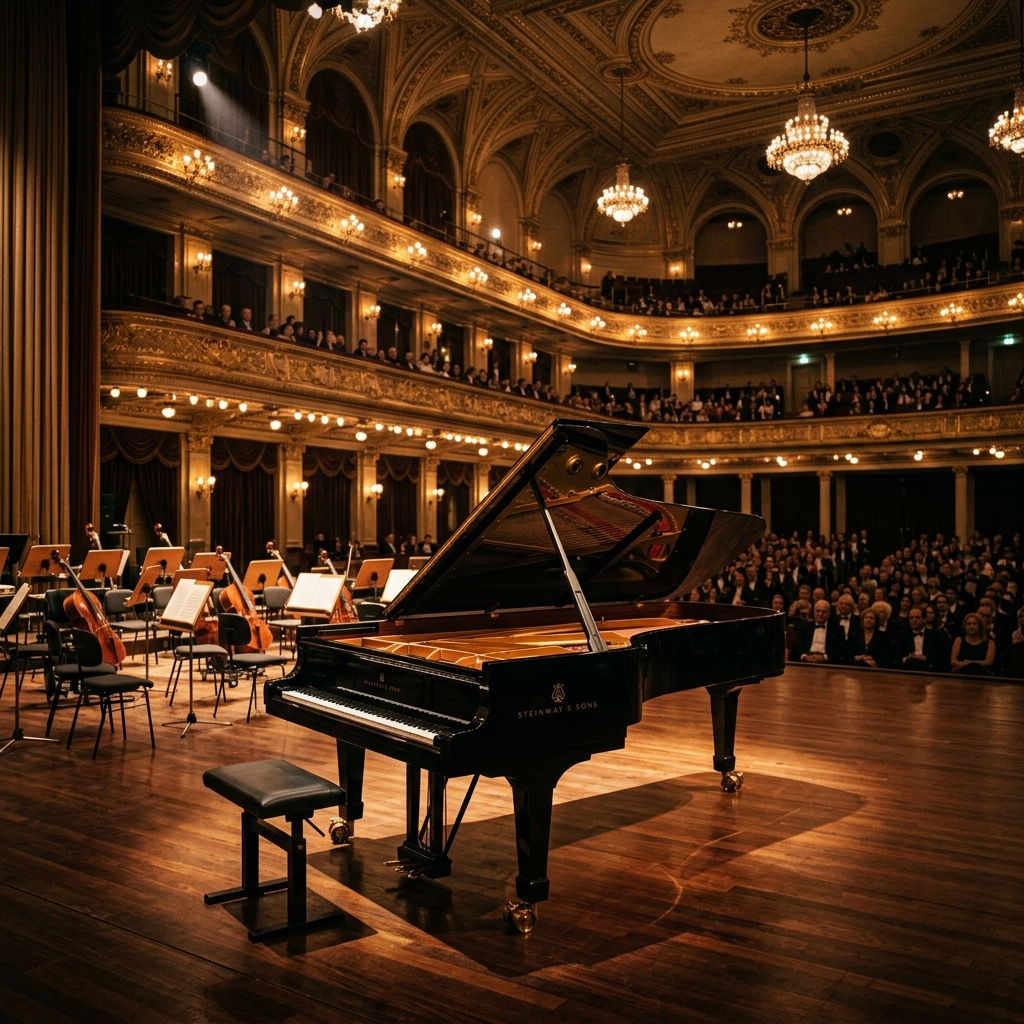
For most residential pianists, the standard pitch for tuning is universally accepted as A=440 Hz. It is the pitch your child’s piano teacher expects, the pitch pre-programmed into commercial digital tuners, and the international standard adopted in 1939. However, step backstage at a major symphony hall when a world-class orchestra rolls into town, and you will quickly discover a different reality. Many major symphony orchestras, from Chicago to Cleveland, demand that the concert grand piano be tuned higher—specifically to A=442 Hz.
Why this discrepancy? Why do professional musicians push the limits of string tension, and what does it mean for the structural integrity of the piano? The answer lies in a combination of acoustic brilliance, ensemble dynamics, and the hidden science of concert hall climate control.
The Search for Brilliance and Projection
When a soloist performs a piano concerto with a full 90-piece symphony orchestra, they are engaged in a monumental acoustic battle. The piano must project its sound over a massive wall of strings, brass, and percussion. Tuning a piano slightly sharper, to A=442 Hz, marginally increases the overall tension on the soundboard. This added tension produces a slightly brighter, more penetrating tone.
Furthermore, string and wind instruments naturally tend to play slightly sharper as a performance progresses. As the musicians blow warm air into woodwinds and brass, the instruments warm up and their pitch rises. String players, seeking a more brilliant and cutting edge to their sound, often tune slightly above 440 Hz. If the piano—an instrument whose pitch cannot be adjusted mid-performance—were left strictly at A=440 Hz, it would sound noticeably flat and dull compared to the rest of the orchestra by the second movement.
The Concert Hall Climate Conundrum
A concert hall is a massively challenging environment for an acoustic piano. Many older, historic performing arts centers possess what can only be described as primitive climate control systems. A hall might sit empty and cool all day at 30% relative humidity, only to be suddenly flooded by 2,000 warm, breathing audience members and a stage full of hot, blazing spotlights.
As the temperature rises and humidity fluctuates rapidly during a performance, a piano’s soundboard will constantly shift. Master technicians know that accommodating an orchestra's demand for higher pitches in such unpredictable environments requires foresight. In fact, many resident technicians will engage in "pitch creeping"—allowing the concert grand's pitch to slowly creep upwards over several weeks prior to a major orchestral visit. This slow acclimation allows the instrument's massive cast-iron plate and wooden soundboard to adapt to the A442 tension without sudden shock or tuning instability during the performance.
Can My Home Piano Be Tuned to A442?
If higher tension means a brighter, more brilliant tone, should you ask your technician to tune your living room upright to A442? Generally, the answer is no.
Concert grand pianos (typically 9 feet in length) are engineered to withstand immense structural forces. A standard home upright or baby grand may not possess the same structural reinforcements. For older, vintage pianos, the added tension of an A442 tuning could risk snapping aged, brittle strings or compromising an already weakened pinblock.
Furthermore, tuning a home piano to A442 can create significant issues if you play along with recorded music, electronic keyboards, or other standard-tuned instruments, as the acoustic piano will consistently clash.
The Art of the Professional Technician
Whether tuning to the standard A440 for a quiet living room or pushing the envelope to A442 for a blazing concerto, professional tuning is a delicate art of understanding an instrument's environment, its structural limits, and its intended use. It is a process that requires far more than just tightening a string until an electronic meter flashes green.
Looking for concert-level expertise for your own instrument?
With over 25 years of specialized experience catering to both prestigious concert halls and residential homes, Piano Inside provides elite, climate-aware tuning and technical services. Whether you are searching for expert piano tuners Toronto residents trust, seeking professional piano movers Toronto families rely on, or looking to purchase exquisitely maintained used pianos Toronto musicians love, we deliver unparalleled craftsmanship. Contact us today to schedule your next service.